Panasonic DMC-TZ1 Video Test

How good is the quality of the TZ1 when it comes to recording video. For such an old point and shoot camera, the quality is still acceptable in 2022. Highest setting is 30 frames per second VGA [example video below]. Other mode options for video include 10 frames per second VGA, 10fps QVGA,  and 30 frames per second QVGA. So its 320x240 pixels, which is the size of QVGA Vs 640x480, the standard for VGA.


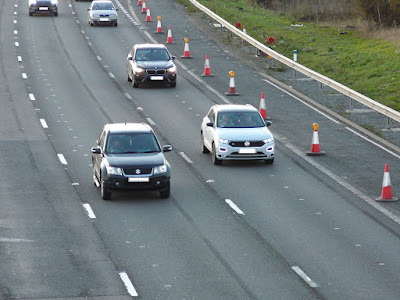
I think most people will use VGA. The video quality test of cars passing down the motorway isn't too bad. And, with the TZ1 there is the bonus of being able to use the zoom when in record mode. On the newer TZ3 that option is not available. Panasonic left it out for some reason.

The quality of this footage is much better than what can be achieved with the Lumix FZ50 Bridge camera. I own both cameras and have compared videos. The TZ1 wins quite easily. Video is not the FZ50's strong point. I also own the TZ3. And when it comes to video quality, the TZ3 is very similar in quality to the TZ1.

Panasonic lumix dmc-tz1 digital camera

The Panasonic Lumix DMC-TZ1 digital camera with a Leica lens has been a fantastic little camera for me. It offers a good range of features for photography enthusiasts. This camera has a fairly powerful lens [good piece of glass] that is able to capture high-quality images, whether using the zoom or taking close shots in macro mode.


road-motorway_lumix_leica


With its compact size and fast start up time, the TZ1 camera is also great for on-the-go photography. It offers settings like image stabilization / anti-shake, which helps in eliminating blurriness. There are two stabilization options to choose from. I think number 1 is the best out of the two stabilization options.


squirrel_black_white_panasonic_digital_camera


Also, the DMC-TZ1 comes with various shooting and scene modes like sepia, warm, vivid, sports mode and many more that make it easy for users to experiment with different styles and effects. I quite like vivid sepia and vivid black and white. I think the sensor in this model is small. High ISO is a problem. As in, the images are noisy. But keep the ISO low and the results can be pretty good.

The TZ1 can also record video in 480p. Overall the TZ1 is a really good option if you're in the market for an old-school, cheap compact camera. I think it came out in 2006, so now, while low-tech to some or most people, it is still quite a capable camera. And it can be bought for such a low price.

A little update years later. I've had a lot of cameras come into my possession over the years I have owned the TZ1. From very good brands like Canon, Nikon, Fujifilm etc. And the one thing I have noticed that has stood out to me more than anything else has been their build quality. It's been nothing short of terrible. The camera models I've had, which consisted of various, supposedly highly sought after point and shoots and Bridge cameras, were mostly made of plastic. Like, almost totally plastic.

I compared a little Canon IXUS 55 to my Panasonic TZ1, and the difference in build quality was quite shocking. I have no idea why IXUS cameras have had a rise in popularity over the last few years and now sell for high prices. It was so flimsy and poorly made.

In comparison to the TZ1, which is heavy for its size and has real metal around the lens, the zoom ring is metal, the top is metal, the screen is much better quality etc, there is no comparison at all. The IXUS was built like a cheap plastic toy, and the TZ1 is a well built, quality camera. It's that simple.

I sold my IXUS and was glad to see the back of it. Same with the Nikon point and shoot camera I had. Build quality was laughable. They were both prone to faults also. Lens errors, dodgy display screens, weak battery door latch etc. I really expected better from these brands.

And this is why I won't sell my TZ1. Because I know I'll want it back a week later!

Panasonic Lumix DMC TZ1 Full Breakdown

TZ1 - 10x optical zoom & 12.5x EX optical zoom. What if you could easily take a large telephoto lens that can zoom in on distant objects more easily to various places and travel destinations? The TZ1 [TZ stands for travel zoom], a 10x optical zoom lens, was born out of such requests. The 350mm-equivalent zoom and 12.5x optical zoom (35mm-equivalent: 437mm, with 3 million pixels or less) can be enjoyed in a compact size. Let's leave various memories of travel destinations and everyday life in various angles of view.


lumix_camera_2007


Foldable and collapsible lens that achieves compactness


The world's smallest #1 compact optical 10x zoom is achieved by a lens that employs both a flexion zoom and a retractable zoom. A newly designed lens that combines a bright and large aperture with retractable zoom, a compact optical system with flexion zoom, and a high-speed start-up of about 0.95 seconds.

In addition, the high image quality of the Leica DC lens


Of course, the lens quality is the Leica DC Vario-Elmarit F2.8, which has passed Leica Camera's strict standards. Aberration in the telephoto range and distortion in the wide-angle range are minimal, and the light in various scenes can be expressed beautifully.


Beautiful even when zoomed. Optical image stabilization


Camera shake is easy when zooming. Even more so with a large telephoto equivalent to 350mm. The TZ1 is equipped with an image stabilization function that allows you to easily enjoy a large telephoto in any situation, such as during a trip, in a vehicle, or in nature where it is difficult to shoot stably. Also, with optical image stabilization, there is no need to switch modes. If you always turn it on, it will not affect the CCD or image processing, and you will be happy to be able to correct camera shake while maintaining high image quality.


Subject blurring is also suppressed with high sensitivity


A new "high sensitivity mode" has been added to the scene mode. With high sensitivity up to ISO 1600 and a fast shutter speed, you can shoot fast-moving subjects such as pets and children without blurring. In addition, it is possible to brightly shoot scenes where brightness is insufficient, such as dimly lit restaurants and nights, and enjoy shooting without using a flash to make the most of the atmosphere.


Panasonic_Camera_Review


Venus engine with beautiful high sensitivity


The TZ1 is equipped with the new engine Venus Engine III. In addition to realizing high image quality, high-speed response, and power saving, noise at high sensitivities is further reduced, and even in normal shooting mode, high-sensitivity shooting of ISO 800 is possible.


A bright F2.8 lens that is hard to shake


Equipped with a bright Leica DC lens of F2.8. A bright lens is especially effective in dark scenes such as indoors with low lighting or night scenes where the amount of light is insufficient. Combined with the effects of optical image stabilization, you can take clear images that make the most of the lens' inherent descriptive performance.


Set it when you leave


Travel Date


If you set the departure date of your trip and take a picture, you can see what day the picture was taken during playback. It is useful as a record of the trip, such as being able to check the itinerary later if you wonder, "Where is this picture?"


World Time


Just by selecting 32 preset time zones (regions) from the world map, you can set the time of your destination. Data can be recorded at the local time of shooting.


High-speed AF that you can shoot as soon as you encounter it


With five AF modes, including high-speed single-point AF, you can quickly focus on subjects you encounter while traveling. Furthermore, with the installation of linear AF, AF has been sped up in all modes.


A video of a scene that we will never meet again


Let's leave a video of the impressive events and stages you saw on your trip. You can use optical zoom and digital zoom when shooting, and you can shoot distant objects while zooming. VGA (640 x 480 pixels), 16:9 (wide VGA) large size and smooth movement. It supports high-sensitivity shooting that allows you to shoot brightly even at night or indoors.


squirrel_friend_my_sample_image


Built-in memory of approximately 13MB


Even if the SD memory card is full, you can record to the built-in memory when you want to take a few more shots.

Beginners should use Easy mode


This mode allows even first-time users to take pictures easily and casually. The screen display and menus are simple and easy to understand.

Enjoy the beauty of the various scenes that you can only encounter during your trip


Equipped with scenes unique to travel, such as "aerial photography" that allows you to shoot scenery seen from an airplane, and "beach" that is active at a resort. You can also check how to use each mode on the screen.


A high-definition large screen that you can enjoy even during your trip somewhere nice


Equipped with a 2.5-inch, 207,000-pixel fine and bright liquid crystal. You can enjoy images taken in a vehicle or indoors. In addition, a high-sensitivity CCD that uses a pixel-mixing method achieves a bright and easy-to-see display even in dark places, making it easy to frame when shooting dark indoors or night scenes.


camera_buttons


In addition, it is equipped with two functions, "power LCD" and "high angle", which allow you to check the image more comfortably according to the shooting situation. Press and hold the "LCD MODE" button to display the LCD mode selection menu.


Relive your travel memories on the big screen


Lumix's photo appreciation style is to enjoy with everyone on the large LCD of Lumix on the spot, and on the large screen of VIERA at home. By inserting an SD memory card into the SD slot of the VIERA, you can use the TV remote control to play a slide show of the pictures you have taken. As well as a computer monitor. Gathering with your friends or family and looking back on your trip with the photos you've taken is also a pleasure that can only be enjoyed with a travel camera.

Panasonic TZ1 First Thoughts

When looking at the front of the camera, the main attention is drawn to the silver outer frame of the lens (with the Leica logo). The whole arrangement of elements, as it were, mimics the shape of a perfect circle.

Everything has been done to make this, frankly, rather cumbersome but well made design look as light as possible. To some extent, the designers have managed to achieve this. Compared to the offerings from Canon, the TZ1 is much tougher, heavier and better made.

Rounded pen lines, rounded inscriptions. In this light, small elements, whether it be a flash or an auto-focus assist lamp, generally look like decorative ones. The observant reader has already noticed that the lens can be covered with a cap. It has a cable mount (included) so it will be difficult to lose.

Panasonic_Lumix_TZ1_Camera_Control_Dial


By the way, despite its multiplicity, even in the tele position, the leading edge of the zoom does not strongly protrude beyond the dimensions of the device. Only at a far zoom length does the lens show itself. It will not even occur to others that you have a camera with a tenfold optical zoom in your hands.

On the side of the handle there is a special insert with an attachment for a hand strap. The top edge of the camera is full of controls. There is the mode selector, and the power switch, and the control button for the MEGA O.I.S. image stabilizer, and, of course, shutter release. It is framed by a metal ring zoom lever.

Personally, such a solution for controlling the zoom is not very important to me, but since reputable developers persistently use it in their products, it means that it is not so important, or works well for most consumers. I have grown to realise that it is very good when compared to other cameras. 

There is a small wish for future developments to the stabilization control button. In this implementation, it simply initiates a submenu call, in which you need to select the desired item with the arrows.

Sure, that there are a significant number of people for whom it is more convenient to make a choice without resorting to the joystick, i.e. by pressing the button again, similar to choosing the desired flash mode or delay timer value. After all, there are only three points in it. If desired, you can even leave both methods of control. Despite a few quirks, I like this camera a lot.